Assumptions, Bias and the Stories We Tell Ourselves
Why our brains take shortcuts, and how creative learning can help us see beyond them.
Have you ever met someone and immediately formed an opinion about them? Or found yourself making a quick judgement about a situation before you knew all the facts?
You most certainly will have because the truth is, we all do it.
Assumptions and bias are a natural part of being human. They are not necessarily a sign of prejudice or bad intent. Rather, they are evidence of how our brains have evolved to help us navigate the world.
Our ancestors relied on quick assessments to survive. Faced with uncertainty, the brain learned to rapidly answer two important questions:
- Is this safe or dangerous?
- Is this familiar or different?
These shortcuts helped us make instant decisions in potentially life-threatening situations. Thousands of years later, our brains still work in much the same way, even though most of us are no longer deciding whether to fight, flee or avoid a hungry predator.
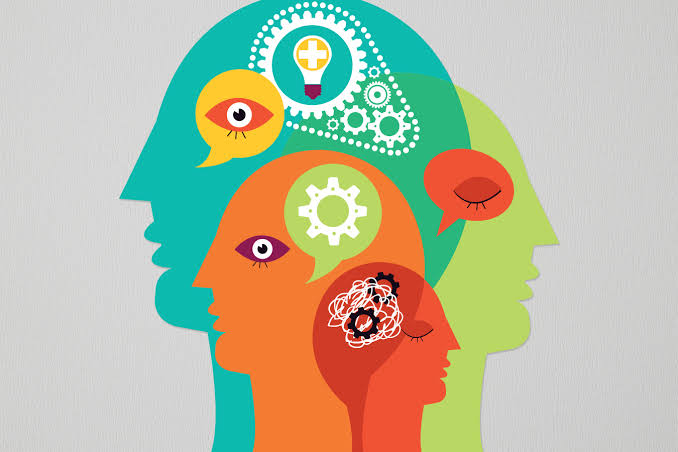
One of the most fascinating things about the human brain is the sheer volume of information it processes every second. Researchers estimate that at any given moment, our brains receive around 11 million pieces of information through our senses, our environment and our own internal bodily processes. Yet we can consciously process only around 40 pieces of information per second.
That means almost everything is being filtered and interpreted unconsciously. Without this filtering system, everyday tasks would become overwhelming. Imagine having to consciously think through every step involved in making a cup of tea, driving a car or tying your shoelaces. Our brains rely on previous experiences to help us make sense of the world quickly and efficiently.
The challenge is that the same process influences how we perceive people.
As diversity and inclusion expert Verna Myers famously said:
“Biases are the stories we make up about people before we know who they actually are.”
When we encounter someone new, our brains instinctively begin filling in the gaps. We draw conclusions based on our experiences, cultural influences, values and beliefs. Often, we do this without even realising it. The difficulty is that those stories may not be accurate.
Assumptions can create blind spots. They can influence how we interact with others, the questions we ask and ultimately how fairly we treat people. In a workplace they can negatively influence recruitment decisions and the opportunities we offer. Recognising that these unconscious assumptions exist is the first step towards challenging them.
Talking about bias can sometimes feel uncomfortable. That’s why, in our training sessions, we often use activities, discussions and riddles to help participants experience these concepts for themselves.
Recently, while working with a group of social housing customers, we used the classic “pilot and nurse” riddle to explore unconscious assumptions.
Not everyone arrived at the answer immediately. In fact, many participants shared the fascinating explanations their brains had created to make sense of the scenario once they had assumed that the pilot must be male. Some imagined air traffic control guiding the nurse to land the plane. Others suggested she had learned from flight simulation games or that the question was a trick and the plane had never left the runway at all!
The discussion that followed was both entertaining and insightful. Participants could see, in real time, how quickly the mind fills gaps in knowledge with assumptions.
More recently, while working with a group of apprentices, we designed an activity called Both, Neither or One?
Participants were presented with a series of statements about the two facilitators and asked to decide whether they believed the statement applied to both people, one person or neither. The statements covered topics such as supporting a particular football team, attending university, having a disability and following a particular faith.
The answers were often hilarious, but they were also incredibly revealing, and the real learning came when participants explained how they had reached their conclusions.
For example, participants confidently concluded that one of the facilitators couldn’t possibly be a supporter of a North East football team because they had a ‘southern’ accent and that neither facilitator could possibly have a disability because they couldn’t see one.
Without being prompted, participants began uncovering exactly how assumptions are formed and how easily they can lead us away from the truth.
Assumptions are not something that happen occasionally. They happen all the time. They are part of how our brains make sense of an incredibly complex world. The goal is not to eliminate them completely, because that would be impossible. Instead, it is to become more aware of them. When we pause to question our first impressions, seek additional information and remain curious about other people’s experiences, we give ourselves the opportunity to see the bigger picture.
Sometimes understanding our thinking is the first step towards challenging it and recognising the story our brain has created is enough to start writing a better one.
Through interactive activities, discussion and practical learning experiences, we help groups explore complex topics such as assumptions, bias and inclusion in ways that are engaging, memorable and thought-provoking. Contact us to learn more.